


How often have you approached a Shop Assistant, Customer Care Representative, or similar, shared your problem, and then received the reply that they were truly sorry, they absolutely wanted to help you (and they probably knew very well how to), but that would be against the company policies?
And you were standing there, thinking: “Doesn't this company want to provide a good service to its customers? If yes, why would it hire someone to do the job and then tie their hands with some policies?”
Read on 👇
✈️ Dr. Dao & United Airlines
On April 9, 2017, at Chicago O'Hare International Airport, Dr. David Dao was peacefully sitting in the plane of his United Express Flight 3411, headed home (United Express is the brand name for the regional branch of United Airlines). What Dr. Dao and the rest of the passengers didn’t know was that 19 minutes before their flight was scheduled to take off, four employees of Republic Airways (a regional airline contracted by United Airlines) were rebooked onto it, even though everyone had already boarded, taken their seat, and the aircraft was fully occupied.
At first, United Airlines requested that four passengers volunteer to leave the plane. The deal was sweetened by $400 in travel vouchers, a hotel stay, and a seat on a flight leaving more than 21 hours later. With no volunteers, the offer was increased to $800 in vouchers - again, to no avail. Just before the scheduled departure time, United Airlines announced that four passengers would be selected by computer and involuntarily removed to accommodate the four Republic Airways employees.
Three of the selected passengers cooperated with the directions to leave the aircraft. The fourth one, however - Dr. Dao - refused. You see, he was a pulmonologist and he needed to see patients at his clinic the next day. And even though he explained all this, United Airlines decided to remove him from the plane by force.
This decision resulted in Dr. Dao being taken to the hospital with a broken nose, missing two front teeth, sinus injuries, and a significant concussion. Moreover, videos of Dr. Dao - bloodied, bruised, and unconscious - being dragged by the arms down the aircraft aisle (past rows of onlooking passengers) immediately went viral all over the Internet. One such video was shared 87,000 times and viewed 6.8 million times in less than a day.
United Airlines CEO, Oscar Munoz, issued a statement the following day that downplayed the treatment of Dr. Dao, referring to the incident as “re-accommodating the customers”. Munoz also sent an email to the United Airlines staff commending the crew's actions for following established procedures and blaming Dr. Dao for not cooperating, calling him “disruptive” and “belligerent”.
Munoz and United Airlines were sharply criticized for their initial statements. As a result, two days after the incident, Munoz issued another statement, apologizing and promising that such an incident would never again occur on a United Airlines aircraft. This time, he was determined that no one should ever be mistreated this way. He added: “It happened because policies were placed ahead of our shared values, and procedures got in the way of what we know is right.”
❗️The following video contains disturbing material. Viewer discretion is advised.
Two years later, Dr. Dao broke his silence and spoke about the incident. When asked what he would say to those men who had pulled him off the plane, he replied: “I’m not angry with them. They have a job to do; they had to do it. If they don’t do it, they may lose their job. So I’m not angry with them or anything like this. That’s their job.”
🔴 The Red Bead Experiment
Dr. William Edwards Deming (October 14, 1900 - December 20, 1993) is widely regarded as the father of Quality Management. He was an American business theorist, economist, industrial engineer, management consultant, statistician, writer. At first, he studied electrical engineering and later focused on mathematical physics. Dr. Deming developed multiple theories and techniques that linked together different subjects, like statistics, systems and systems thinking, human psychology, management and leadership, etc. He helped many business leaders, major corporations, and governments worldwide. He is also credited with revolutionizing Japan's industry and making it one of the strongest economies globally.
In the early 1980s, Dr. Deming started using the Red Bead Experiment in his 4-day seminars. With the help of participants from the audience (called “willing workers”), he illustrated the effects of poor management on quality:
A shipment of input materials (red and white beads) was poured into a box and mixed around. Each worker was given a paddle with 50 holes, which they used to scoop up 50 beads exactly (the prescribed workload). The goal was to scoop up only white beads, but the workers were not allowed to manually alter the output of their activity. They had to strictly follow the procedure and only use the available tools and materials. One by one, they scooped up their 50 beads and brought them for inspection. The number of red beads in the paddle (i.e. the failed produce) was recorded alongside the worker’s name.
The Red Bead Experiment teaches us many lessons, the most important one of which is this: Everyone’s performance is a sum of two things - their individual contribution and the system they operate in.

Therefore, even if we can put a numeric value to how well an individual is performing (e.g. red vs. white beads per worker per day), we still have two unknowns left, so we can't solve the problem.
However, Dr. Deming believed that most of what we see happening is because of the system, and it's the job of Management to take care of that system. That’s why the focus should fall on managing the system, not on managing the individual performance (which is mainly the product of that system).
💡 Underlying Principles
Point #1:
Let’s first define what a system is: A system is a set of interrelated entities, whose combined function is bigger and better than the sum of the individual parts.
Which also means that a set of entities just put together, at the same place, that don’t interact with each other and, thus, don’t enhance their individual performance, is not a system.
Examples:
A bicycle is a system. It contains different parts, each of these parts has its individual function, but put together, these parts create a device that can take us to wonderful places 🌞🚴
A few people report to the same manager, but their individual performance does not depend on each other. Therefore, they are not a team. They are just a bunch of individual contributors reporting to the same person.
Additionally, a system is defined by two things: its structure and its function. And each one of these impacts the other. For example, if we place the front wheel of a bicycle at a 90-degree angle (system structure), we won’t be going forward anymore but to the sides (system function).
Therefore, what defines the management system is the organizational structure (system structure) and the management/leadership (system function), both of which are accompanied by their respective official policies, frameworks, governing processes, guidelines, procedures, etc. (e.g. company vision, mission, values, strategy, OKRs, Employee Handbook, individual objectives setting and yearly performance review, career development, ways of working, decision making, conflict resolution, official communication, and so on).

Point #2:
Company culture is what the management system creates.
Think of it as the two sides of the same coin: The management system is the set of all formal structures, policies, procedures, etc., and the way they are implemented, whereas the company culture is the informal (and sometimes unintentional) result of them all. We design and steer the management system to drive the culture, not the other way around.
Note that the company culture is also part of a bigger system: the national culture. But how the latter impacts the former is a topic for another post 😉

Point #3:
We operate within the system constraints.
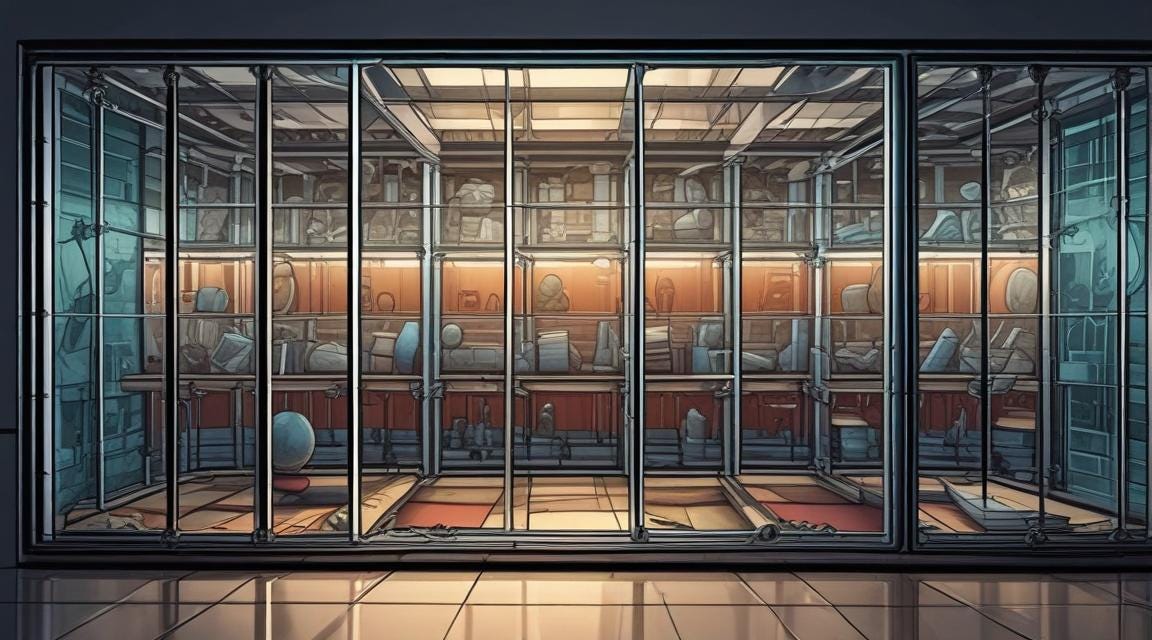
We cannot perform better or differently than what the system allows us to do. Imagine we’re in a box. If that box is tightly sealed from all sides, we cannot escape.
Therefore, when we do something seemingly out of the box, there are two reasons for it: either the boundaries of the box are not where we thought they were, or the box has a flaw, a breaking point, a way out.
So in reality, when incidents like the one at United Airlines are about to happen, we observe one of two scenarios:
The system is built for this type of behavior. It incentivizes it. As a result, the “incident” will happen, people will be praised for handling things the right way, and everything will end there. Which means, this is not really an incident, but an embodiment of the true company culture.
The system is not built for this type of behavior. It penalizes it. In this case, there are two options:
Either the system will not allow the incident to happen in the first place (it will self-correct), or
the system will allow the incident because there is a systemic flaw. However, Management (who are responsible for designing and maintaining the system) will immediately step in to explain that this is the wrong way of handling things, and then take action to correct this systemic flaw so further incidents of the type can be avoided. In this situation, the incident is indeed an incident and not a glimpse at the true company culture.
Judging by the initial response of the United Airlines CEO, the organization was in Scenario 1: the whole system was built for this type of behavior. When they realized that something was terribly wrong with that line of behavior, they took action to change their policies (leaning into Scenario 2b). And if they don’t make the news again with something similar, that will mean those policy changes were indeed effective.
☝️ How to Address This
Step #1: Change Our Perspective
Managers need to understand and accept a few key points:
1️⃣ Creating the Company Culture
Management shapes the culture of the company. When we take on a management role, our focus should fall on managing the system and leading the people in it. That's why we have organizational structures in the first place - the people on the bottom (or client-facing / front-line) level do the job, while the people on all the other levels (i.e. the managers) oversee and guide the process.
2️⃣ Accountability Cannot Be Delegated
While we can assign tasks like describing official policies or procedures to others (e.g. a Business Process Manager 😉), the ultimate accountability still falls on us, as managers. This accountability is tied to our position in the organizational structure, that’s why it cannot be delegated. Regardless of who does the task, everyone will still look to us to set the standards (see more here).

3️⃣ Seeing the Bigger Picture
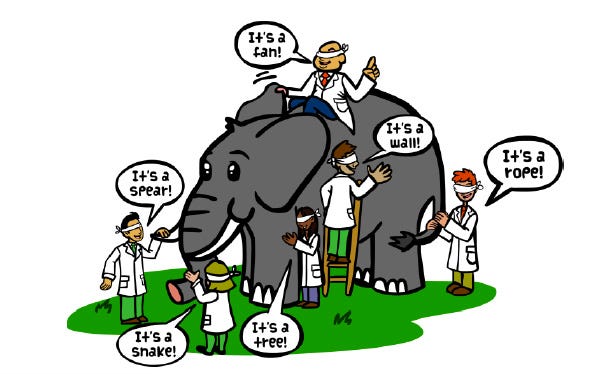
We need to change our approach. Everything is a small part of a larger system. Everything. And sometimes, the problem lies within the thing itself, but most of the time, it's the system that shapes the thing the way it is and the way it behaves.
Step #2: Establish a Problem-Solving Culture
Ultimately, we want an environment where when there's a problem, we fix it right away, the best we can, not just the best we're allowed to. Therefore, we need a system that doesn't stop us from doing what's best. How can we achieve that?
Using the definition of a management system, we have the following three options:
Option 1️⃣
Our organizational structure and management/leadership stay as-is.
That means we have the typical hierarchical structure, as the majority of big organizations nowadays. And we have a plethora or policies, processes, and procedures about literally everything. So we’re looking at a company like United Airlines.
Given these constraints, we can only do two things:
Before incidents happen: Use Risk Analysis techniques (e.g. FMEA) to identify risks in our ways of working and address them before they materialize.
After incidents happen: Use Root-Cause Analysis techniques (e.g. 5-Why) to identify and eliminate the root causes.
⚡️Challenges:
In this kind of setup, everything is planned out beforehand, which actually harms us more than it helps us. Here's why:
The higher-up managers who create the rules are far from the action, but they're the ones deciding what everyone has to do.
The people tasked with describing the rules aren't usually the ones doing the actual work, so the rules don’t fit reality (and don’t cover all edge cases).
Front-line people end up just following rules without thinking. If they start thinking, they'll run into even bigger problems than having rules that don't make sense.
That last point is the most significant issue in such an environment. We need to have everybody thinking at all times if we want to do the right thing the right way and move fast.

Therefore, a better option would be:
Option 2️⃣
Our organizational structure stays as-is, but we change our management/leadership.
Rather than requiring front-line workers to feed information upward to the managers for decision-making, we shift the responsibility for decision-making downward to the front-line workers who already possess the relevant information.
This approach involves equipping managers with the skills to effectively guide their teams, while also letting go of the idea that they need to control every aspect of the process.
Here’s an example of how that was achieved on a US Navy submarine:
⚡️Challenges:
The issue with this setup is that, even though managers have a huge availability of books, trainings, courses, and other resources on how to be good leaders, not many actually demonstrate these leadership qualities. This scarcity indicates that the management system doesn't promote or reward this behavior. So, even though the idea seems good, making it work in reality is tough.
Therefore, an even better option would be:
Option 3️⃣
Both our organizational structure and management/leadership change.
We remove the role of the manager from the organizational structure. As a result, we have no choice but to pass decision-making responsibilities down to the frontline workers, as described in Option 2.
This approach is called Self-Management. It's important to understand that removing the manager doesn't mean letting chaos take over. We still have guidelines and rules, but they simply provide a framework for our actions, allowing us to make the best decisions within that framework.
Here’s an example of how that was achieved at Morning Star:
⚡️Challenges:
Self-Management is not for everyone. As also mentioned in the video, it requires a certain type of people (currently in management positions) to implement this setup, and a certain type of people to thrive in it. It's also a process of evolution, with a steep learning curve. There's no one-size-fits-all approach; each company must find its own way of structuring and operating.
And that’s how we ensure our company consistently delivers the best products and services to its happy customers. And in doing so, we also create a working environment that is fun for everyone.
Thank you for reading 💝
Till next time,
Irina